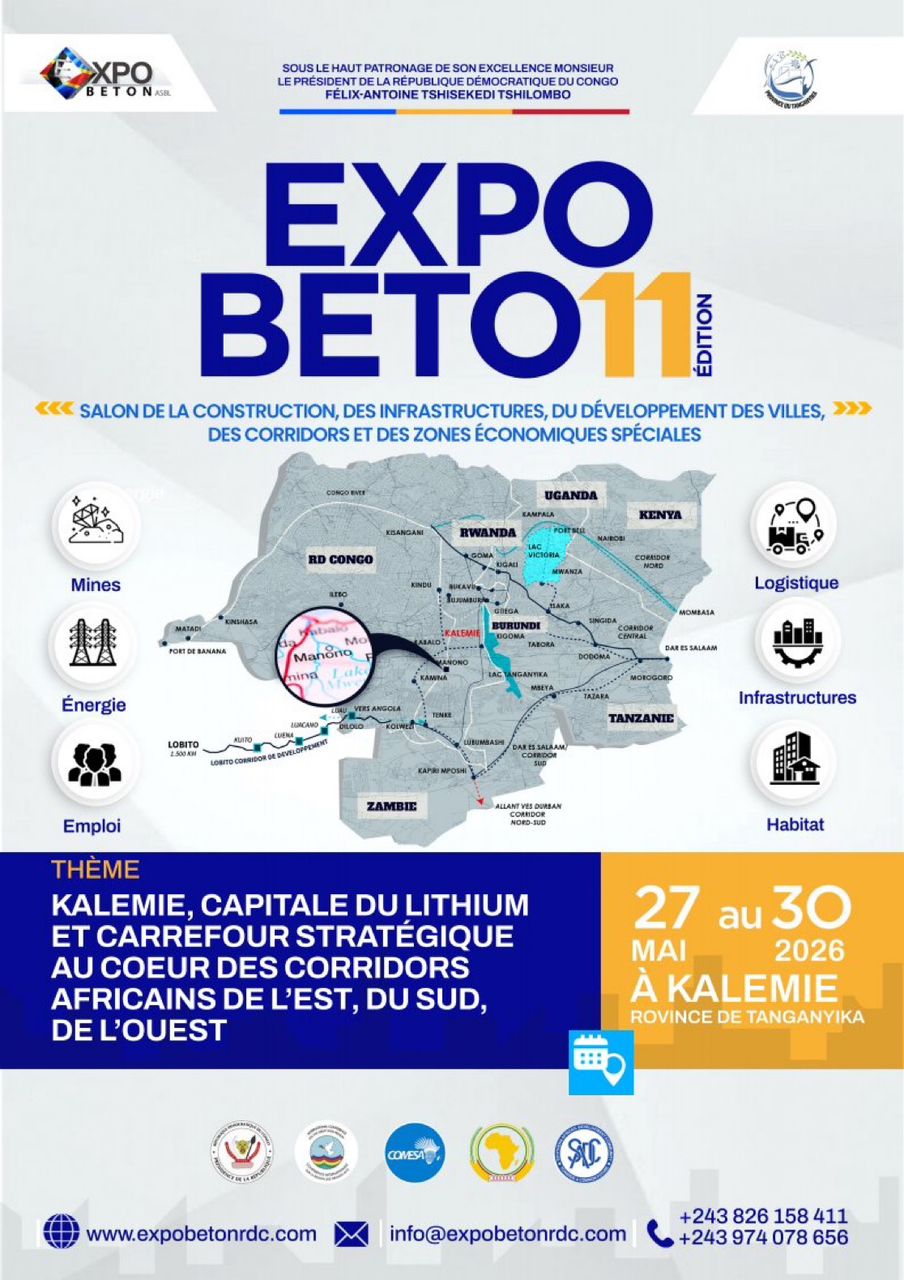

Kinshasa, Lubumbashi, Goma… The urban landscape of the Democratic Republic of Congo (DRC) is undergoing a dramatic transformation. Skyscrapers, luxurious villas, and private residential neighborhoods are springing up at an astonishing rate. However, behind this glittering façade lies a harsh reality: disorganized development, increasing housing inaccessibility, and an urban crisis that threatens social stability. Is the real estate boom in the DRC a blessing or a ticking time bomb?
A Booming Market… But for Whom?
The real estate sector in the DRC is experiencing unprecedented growth, especially in major cities like Kinshasa, Lubumbashi, and Goma. Local and foreign investors are flocking in, attracted by the soaring demand for modern housing and infrastructure. In Gombe, the central business district of Kinshasa, rent prices rival those of Paris and New York.

Meanwhile, the average Congolese struggles to find housing. The housing deficit is estimated at 3.9 million units, requiring 263,039 new homes per year to bridge the gap. Kinshasa alone accounts for 54.4% of this deficit, meaning 143,092 new housing units are needed annually. Yet, new real estate projects primarily cater to the wealthy elite, leaving the majority of the population to survive in precarious conditions.
An Uncontrolled Population Explosion
With over 100 million inhabitants, the DRC is Africa’s fourth most populous country. Its urban population is growing at an alarming rate: by 2050, Kinshasa is expected to surpass 24 million inhabitants, overtaking megacities like Lagos and Cairo.
This unchecked demographic boom has devastating consequences:
Chaotic expansion of peripheral neighborhoods without basic infrastructure (water, electricity, sanitation).
Proliferation of slums, where thousands of families live in unsanitary conditions.
A speculative land rush, driven by elites acquiring vast amounts of land, making property ownership impossible for the majority.
A Chaotic Urbanization Suffocating Cities
Rather than being a lever for modernization, real estate growth is worsening urban dysfunctions. In Kinshasa, traffic is a daily nightmare: over 47% of the population relies on public transport, yet the lack of structured networks leads to massive traffic jams and record pollution levels.

Infrastructure is failing to keep up:
Deteriorating roads, incapable of handling increasing traffic.
Overloaded electricity and water networks, leaving entire neighborhoods without power and clean water.
A complete lack of urban planning, where projects overlap chaotically, exacerbating urban disorder.
In Goma and Lubumbashi, the situation is no better: unregulated constructions encroach on green spaces, threatening local ecosystems and increasing the risks of natural disasters.
Towards a Two-Speed DRC?
The real estate sector has become a playground for economic and political elites, who invest massively in high-end projects while neglecting social housing. The result? A growing urban divide, widening the gap between affluent districts and informal ghettos.
Solutions exist, but the state must take control:
- Regulate the land market to prevent speculative buying.
- Impose quotas for social housing in all major real estate projects.
- Implement a sustainable urbanization policy, including satellite cities to ease congestion in major urban centers.
- Develop adequate infrastructure, particularly in transportation and sanitation.
- Encourage Public-Private Partnerships (PPPs) to finance sustainable and inclusive projects.

A Future to Build or a Social Time Bomb?
The DRC is at a crossroads. The real estate boom can be a powerful driver of development or a ticking time bomb, depending on the political and economic choices made. If nothing is done, inequalities will deepen, fueling frustrations and social instability.
Leaders must act now to ensure that real estate growth benefits everyone—not just a privileged few. The choice is clear: build a sustainable future, or let urban chaos take over permanently.

Rédaction