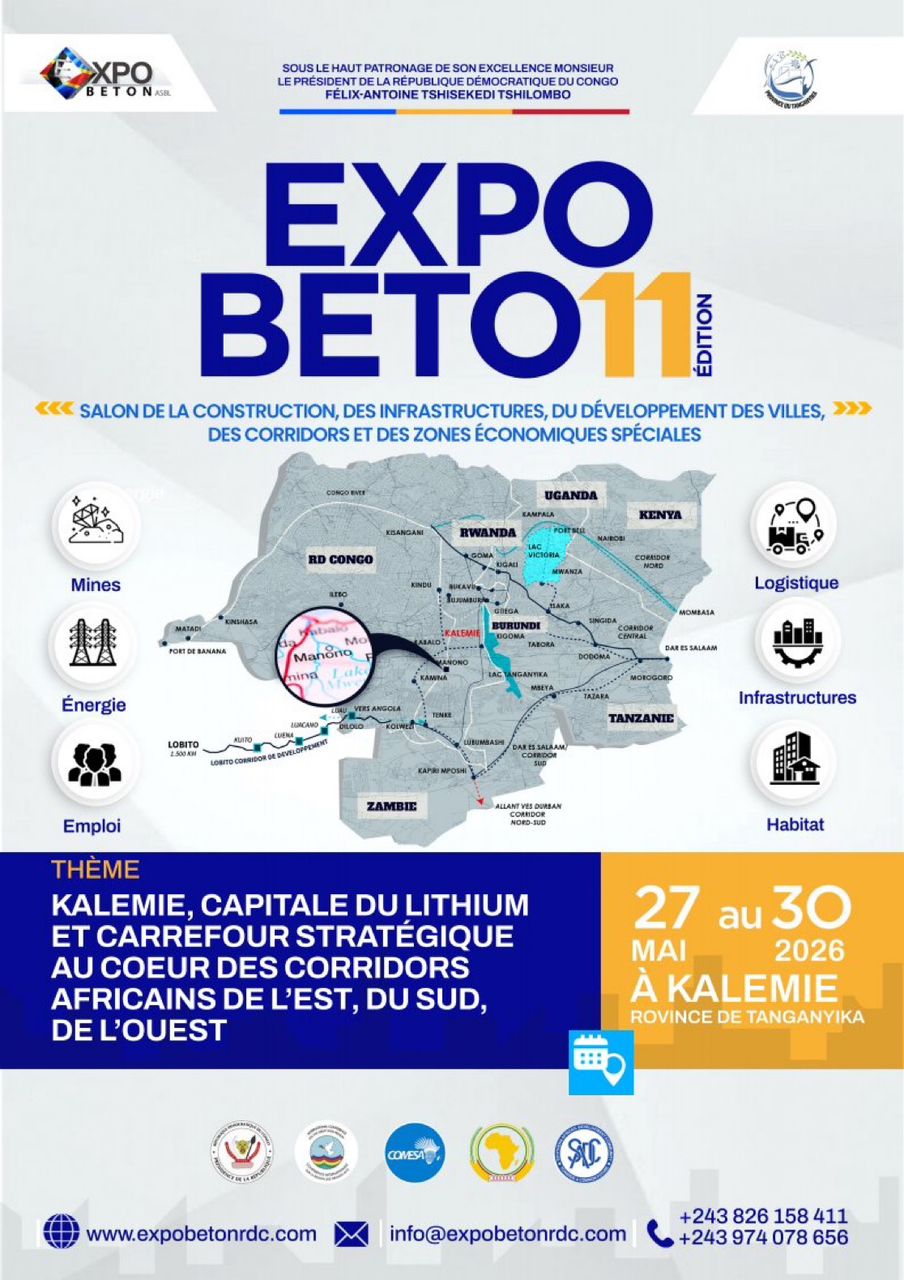

In the Democratic Republic of Congo (DRC), the construction and infrastructure sector is experiencing significant growth, driven by major projects across the country. These ambitious projects, financed by the government, private investors, and public-private partnerships (PPPs), offer a unique opportunity to stimulate local employment and develop skills. But what is the real impact of these large projects on local employment? Let’s examine the main economic, social, and structural benefits.

- A Massive Job Creation Opportunity
The major projects launched in the DRC, such as the rehabilitation of national roads, the construction of hydroelectric dams, airports, ports, and public buildings, require a significant workforce. On average, each major project can create between 1,000 and 5,000 direct jobs, with thousands of indirect jobs in related sectors such as logistics, catering, and services.
Examples of Major Projects and Their Benefits:
Inga III Dam: This massive project, once in its active phase, is expected to generate around 10,000 direct jobs and 25,000 indirect jobs during the construction period.
National Road 1 (RN1): Its modernization, spanning over 1,000 km, has enabled the employment of nearly 8,000 workers, many of whom come from local communities.
Social Housing Construction in Kinshasa: This program aims to deliver more than 50,000 housing units, while providing over 15,000 temporary jobs over five years.

- Development of Local Skills
While major projects create jobs, they also offer an opportunity to develop local skills, especially through on-the-job training. Companies involved in these projects regularly train workers, technicians, and engineers in new construction techniques.
On-the-Job Training: According to data from the Chamber of Trades and Crafts (CMA), nearly 30% of workers recruited on construction sites benefit from certified training, enhancing their future employability.
Professional Certifications: Certification programs, supported by ExpoBeton, encourage workers and artisans to professionalize in various BTP (Building and Public Works) trades.
- Impact on the Local Economy
Construction projects not only impact employment but also boost the local economy. Each project energizes the economy of the regions concerned by stimulating local commercial activities.
Increased Household Income: Jobs created provide many families with stable income, thereby improving their standard of living.

Development of Local SMEs: Many small and medium-sized enterprises (SMEs) specializing in material supply, transport services, and catering directly benefit from major projects.
- Challenges to Overcome
Despite these positive impacts, several challenges remain in maximizing the benefits of major projects for local employment:
Underutilization of Qualified Local Labor: Some foreign companies still prefer using their own teams, limiting opportunities for local workers.
Insufficient Specialized Training: The training offered is sometimes insufficient to meet the real needs for specialized skills in key trades such as project management and engineering.
Precarious Working Conditions: On some sites, local workers face harsh working conditions, with wages often below international standards.
- Future Perspectives
To maximize the impact of major construction projects on local employment, several measures can be considered:

Strengthening Public-Private Partnerships to impose social clauses requiring a minimum quota of local hires.
Creating Specialized Training Centers in areas where major projects are taking place, to quickly train a qualified workforce.
Encouraging Local Entrepreneurship in BTP-related trades by facilitating access to funding for SMEs in the sector.
The major construction projects in the DRC represent a tremendous opportunity for job creation and local skills development. However, to maximize the benefits, it is essential to adopt incentive policies and strengthen professional training systems. By relying on initiatives such as ExpoBeton and certification programs, the DRC can transform its BTP sector into a true engine of inclusive and sustainable growth.
Rédaction